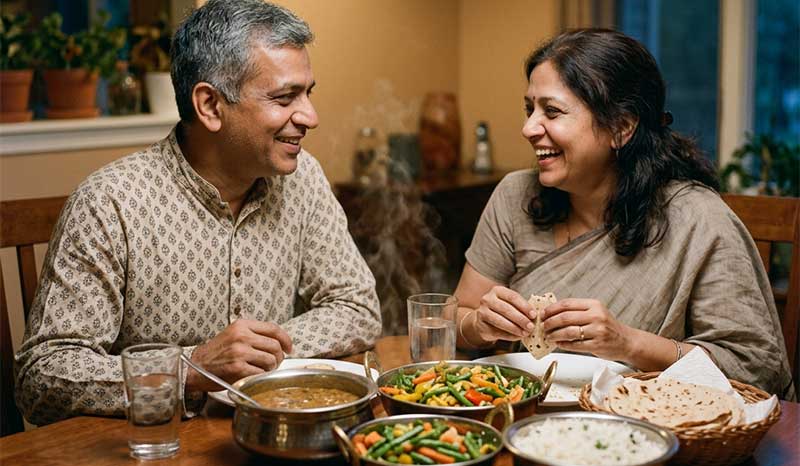
The Role of Protein in Your 50s
Fifty. The number that makes most Indians pause, reflect, and perhaps worry.
This is the decade when neglected nutrition catches up with brutal consequences. The muscle loss that started quietly in their 30s has now accelerated. The bone density that peaked in their 20s is plummeting. The metabolic issues that were "borderline" are now full-blown diseases.
But here's the critical truth they - and you - need to understand: Your 50s aren't when you resign yourself to decline. They're your last clear chance to take decisive action that will determine the quality of the next 30-40 years of your life. And protein is not just important—it's absolutely non-negotiable.
The 50s Reality: Understanding the Acceleration
Your fifties represent a critical threshold in biological aging. Here's the sobering science:
Sarcopenia Becomes Visible and Dangerous
Sarcopenia—progressive muscle loss—affects 30% of individuals over 60 and more than 50% of those over 80. But it doesn't start at 60. The groundwork is laid in your 50s.
After age 50, muscle loss can accelerate to 1-2% per year compared to 3-8% per decade earlier. Muscle wasting becomes more pronounced in the presence of any acute or chronic morbidity and hospitalization which often co-exists in the elderly population, making the elderly more vulnerable to developing sarcopenia.
For Indians, who already have lower baseline muscle mass than Western populations, this acceleration is particularly dangerous. The difference between a healthy 60-year-old and a frail 60-year-old is often determined by what happens in the 50s.

Anabolic Resistance Is Now Your Reality
With increasing age, muscle may become resistant to the stimulatory effects of normal postprandial concentrations of leucine. This means:
- Your muscles are significantly less responsive to protein than in younger years
- You need substantially MORE protein per meal to achieve any muscle building
- Without adequate protein, you lose muscle even if you exercise
- The "anabolic window" after eating protein narrows dramatically
Translation: The protein intake that barely worked in your 40s is completely insufficient in your 50s.
Hormonal Changes Reach Critical Mass
For Women (50-55 is typical menopause age):
Menopause brings catastrophic changes to bone and muscle:
- Women lose about 50% of their trabecular bone and 30% of their cortical bone during the course of their lifetime, about half of which is lost during the first 10 years after the menopause
- Women lose bone the fastest during menopause—on average 1 to 2% of their bone density every year, sometimes even as high as 3 to 5% every year. This usually lasts for 5 years
- Up to 20% of bone loss can happen during the menopause stages and approximately 1 in 10 women over the age of 60 are affected by osteoporosis worldwide
- Estrogen depletion increases muscle protein breakdown while decreasing synthesis
- Risk of fractures skyrockets
For Men:
- Testosterone continues declining
- Growth hormone production drops significantly
- Muscle becomes harder to build and easier to lose
- Visceral fat accumulates despite same caloric intake
- Risk of metabolic syndrome increases
Disease Manifestation Accelerates
Your 50s are when "borderline" becomes "diagnosed":
- Prediabetes → Type 2 Diabetes
- Prehypertension → Hypertension
- Elevated cholesterol → Cardiovascular disease
- Osteopenia → Osteoporosis
- Metabolic syndrome fully manifests
Sarcopenia is associated with metabolic consequences, including a prominent decline in resting energy expenditure. Decline in REE and physical activity may play a key role in the accumulation of visceral fat and ectopic fat, contributing to various metabolic complications such as nonalcoholic fatty liver disease, insulin resistance, and increased risk of type 2 diabetes mellitus.
For Indians already at high genetic risk for diabetes and heart disease, sarcopenia compounds these risks catastrophically.
The Independence Threshold
What you do in your 50s determines:
- Whether you'll need a walker at 70
- Whether you'll live independently at 80
- Whether you'll play with grandchildren or watch from a chair
- Whether you'll travel in your retirement or be homebound
- Whether you'll need full-time care or maintain autonomy
The 50s are your last decade where building strength is relatively easy. Wait until your 60s or 70s, and the effort required increases exponentially while results diminish dramatically.
Why Protein Becomes Absolutely Non-Negotiable in Your 50s
1. Fighting Accelerated Muscle Loss (Most Critical)
To maximize muscle protein synthesis while being cognizant of total energy intake, we propose a dietary plan that includes 25–30g of high quality protein per meal for older adults. However, recent research on elderly individuals with sarcopenia suggests even higher amounts may be needed.
The stark reality: Without adequate protein in your 50s, you will lose muscle rapidly. With adequate protein combined with resistance exercise, you can maintain and even build muscle despite aging.
2. Preventing Osteoporosis (Critical for Women, Important for Men)
European guidance for the diagnosis and management of osteoporosis in postmenopausal women recommends a daily intake of at least 1000 mg/day for calcium, 800 IU/day for vitamin D and 1 g/kg body weight of protein for all women aged over 50 years.
Protein is essential for bone health because it:
- Provides amino acids to construct bone matrix
- Increases serum levels of insulin-like growth factor 1 (IGF-1), involved in osteoblast proliferation
- Supports collagen production (bone structure)
- Works synergistically with calcium and vitamin D
Recent longitudinal, epidemiological, and population studies on osteoporosis treatment have indicated that protein intake above the recommended daily amount (0.8 g/kg of body weight/day) can maintain BMD and reduce the risk of osteoporotic fractures in older adult patients.
3. Metabolic Disease Prevention and Management
Adequate protein helps:
- Maintain insulin sensitivity (crucial for diabetes prevention/management)
- Preserve metabolic rate despite muscle loss
- Reduce visceral fat accumulation
- Support cardiovascular health
- Prevent sarcopenic obesity (the deadly combination of low muscle + high fat)
4. Maintaining Independence and Quality of Life
Sarcopenia significantly reduces mobility, increases frailty, and elevates the risk of falls, fractures, and disability, ultimately leading to a lower quality of life and increased healthcare burden.
The muscle you preserve in your 50s directly determines:
- Ability to carry groceries
- Getting up from a chair without assistance
- Climbing stairs independently
- Recovering from illness or surgery
- Preventing falls and fractures
- Living without assistance
5. Longevity and Healthy Aging
Higher muscle mass in older adults is associated with:
- Reduced mortality risk
- Better immune function
- Faster recovery from illness
- Reduced hospitalization
- Better surgical outcomes
- Maintained cognitive function
How Much Protein Do You REALLY Need in Your 50s?
The standard RDA of 0.8g/kg body weight was established based on young adults and is grossly insufficient for people over 50.
For Generally Healthy Adults in Their 50s
Researchers recommend that older adults consume 1-1.2 grams of protein per kilogram body weight (one kilogram is about 2.2 pounds).
Minimum for Health Preservation:
- Men: 1.0-1.2g per kg body weight (70-84g for 70kg man)
- Women: 1.0-1.2g per kg body weight (60-72g for 60kg woman)
Optimal for Muscle Preservation:
- Men: 1.2-1.5g per kg (84-105g for 70kg man)
- Women: 1.2-1.5g per kg (72-90g for 60kg woman)
For Active Individuals/Resistance Training:
- Men: 1.4-1.8g per kg (98-126g for 70kg man)
- Women: 1.4-1.8g per kg (84-108g for 60kg woman)
Special Circumstances Common in Your 50s
Postmenopausal Women (Bone Protection):
- Minimum 1.0-1.2g per kg as per European guidelines
- Higher end recommended: 1.2-1.6g per kg for bone and muscle health
Weight Loss (Very Common in 50s):
- 1.4-1.8g per kg to preserve muscle while losing fat
- CRITICAL: Losing weight without adequate protein = losing muscle, worsening health
Recovering from Illness/Surgery:
- 1.5-2.0g per kg during recovery period
- Your healing capacity is slower now; protein accelerates it
Managing Chronic Diseases:
- Diabetes, hypertension, heart disease: 1.2-1.5g per kg
- Protein helps manage all these conditions
Vegetarians/Vegans:
- Aim for 1.3-1.6g per kg (plant proteins less efficiently utilized)
- Focus on protein combining and quality sources
The Indian 50s Reality Check
Most Indians in their 50s consume only 40-60g protein daily—falling catastrophically short of the 70-120g needed for optimal health in this critical decade.
The Per-Meal Strategy: Critical in Your 50s
Due to severe anabolic resistance in your 50s, protein distribution becomes even more critical than total amount.
The 30-40g Rule for Your 50s
Based on research, older adults need 30-40g of high-quality protein per meal to maximally stimulate muscle protein synthesis—higher than younger adults.
Optimal Distribution Strategy
Breakfast (30-40g protein) - MOST IMPORTANT:
- Breaks overnight fasting when significant muscle breakdown occurs
- Sets metabolic tone for entire day
- Studies show this meal has biggest impact on muscle preservation
- Never skip breakfast in your 50s
Lunch (30-40g protein):
- Maintains muscle protein synthesis through afternoon
- Prevents energy crashes
- Supports afternoon activities and work
Dinner (30-40g protein):
- Supports overnight muscle repair
- Prevents nocturnal muscle breakdown
- Should not be your only high-protein meal
Post-Exercise (30-40g within 2 hours if you exercise):
- Absolutely critical in your 50s
- Recovery is much slower now
- Protein makes the difference between progress and injury
Why Distribution Matters Even More in Your 50s
Among individuals who consume adequate total protein (0.8 to 1.3 g/kg BW/d), the preponderance of evidence suggests that consuming at least one high-protein meal per day may be sufficient to support skeletal muscle-related outcomes even if the distribution is unbalanced.
However, for optimal results, especially with anabolic resistance, spreading protein across meals is superior to concentrating it in one meal.
Best Protein Sources for 50-Something Indians
The Quality Question: Animal vs. Plant
Observational studies favor animal versus plant protein sources for sarcopenia-related parameters. Rationales include varied protein quality (essential and branch chain amino acids and leucine), bioaccessibility, and bioactivity.
Translation: Animal proteins are more effective for muscle preservation. Vegetarians need higher total intake and careful combining.
Budget-Friendly High-Protein Foods for Retirement-Age Indians
Most Economical:
- Eggs (₹5-7 each, 6g protein): Still the best value, complete protein
- Dal/Lentils (₹100-250/kg): Must combine with grains for complete protein
- Milk/Curd (₹50-80/liter): Good but needs quantity for adequate protein
- Chicken (₹180-300/kg, 31g per 100g): Lean, high-quality, affordable
- Fish (₹200-500/kg, 20-30g per 100g): Excellent, especially for heart health
- Paneer (₹300-450/kg, 18g per 100g): Vegetarian complete protein
High-Protein Breakfast Options (30-40g)
Must eat breakfast every single day in your 50s:
- 4-egg omelette + 2 whole wheat toast = 30g protein
- Greek yogurt (250g) + nuts (40g) + seeds = 35g protein
- Protein smoothie: Milk + banana + peanut butter + protein powder = 40g
- Paneer bhurji (150g) + 3 rotis = 38g protein
- Moong dal chilla (4) + curd (200g) = 35g protein
- Idli (6) + sambar (2 cups dal) + egg whites (4) = 32g protein
Lunch and Dinner Options (30-40g each)
Vegetarian:
- Dal-heavy thali: 2 cups dal + 2 rotis + curd + sabzi = 38g protein
- Rajma-chawal: 2 cups rajma + brown rice + curd = 35g protein
- Chole bowl: 2 cups chole + 2 rotis + paneer raita = 40g protein
- Palak paneer (200g) + 3 rotis + dal = 42g protein
Non-Vegetarian:
- Chicken curry (150g) + 2 rotis + dal = 55g protein
- Fish meal (150g) + rice + dal = 45g protein
- Egg curry (4 eggs) + 2 rotis + vegetables = 38g protein
- Grilled chicken (200g) + salad + curd = 65g protein
Strategic Snacks (15-20g protein)
Important in 50s to hit protein targets:
- 3 boiled eggs = 18g
- Roasted chana (1 cup) = 12g
- Greek yogurt (150g) + nuts = 18g
- Protein shake = 20-25g
- Paneer (100g) with vegetables = 18g
Different Realities: Men vs. Women in Their 50s
For Men in Their 50s
Primary Health Battles:
1. Preventing Metabolic Syndrome
- Combination of belly fat, high blood pressure, elevated blood sugar, abnormal cholesterol
- Sarcopenia dramatically increases risk
- High protein helps on all fronts
- Critical decade for prevention
2. Maintaining Cardiovascular Health
- Heart disease risk peaks in 50s and 60s
- Muscle preservation improves all cardiac risk markers
- Protein supports healthy blood pressure and lipids
- Prevention now vs. treatment later
3. Preserving Strength and Vitality
- Want to remain active, not become "old man"
- Retirement planning requires good health
- Protein + exercise = maintained strength
- Ability to do physical activities
4. Managing Chronic Diseases
- Diabetes, hypertension often diagnosed in 50s
- Protein helps manage all these conditions
- Better disease control through nutrition
- Reduce medication dependence
Common Mistakes Men Make:
- Thinking "I'm too old to build muscle" (FALSE!)
- Relying on medication alone for chronic diseases
- Not adjusting protein intake upward
- Continuing poor eating habits from younger years
- Retiring and becoming sedentary
For Women in Their 50s
Primary Health Battles:
1. Fighting Catastrophic Bone Loss from Menopause
This is the MOST CRITICAL issue for women in their 50s:
- One in two postmenopausal women will have osteoporosis, and most will suffer a fracture during their lifetime
- There is a rapid phase of bone loss in a 3-year period around the final menstrual period; BMD begins to decline around 1 year prior to the FMP, and continues to decrease in early postmenopause
- Women lose about 50% of their trabecular bone and 30% of their cortical bone during the course of their lifetime, about half of which is lost during the first 10 years after the menopause
Protein + calcium + vitamin D + resistance exercise = ONLY effective strategy
2. Maintaining Muscle Mass Despite Estrogen Loss
- Estrogen protected muscle; now it's gone
- Muscle loss accelerates dramatically
- Protein requirements increase significantly
- Exercise becomes absolutely essential
3. Managing Menopausal Symptoms
- Hot flashes, mood swings, fatigue
- Stable blood sugar (from adequate protein) reduces symptoms
- Better energy and mental clarity
- Improved sleep quality
4. Preventing Sarcopenic Obesity
- Common in postmenopausal women
- Lose muscle, gain fat, same weight
- Extremely dangerous metabolically
- High protein + resistance training prevents this
5. Maintaining Independence
- Hip fractures can end independence
- Muscle weakness leads to falls
- Falls lead to fractures
- Fractures lead to loss of mobility
- Prevention starts NOW with protein
Common Mistakes Women Make:
- Focusing only on calcium, ignoring protein
- Extreme calorie restriction to fight menopausal weight gain (loses muscle!)
- Believing protein is only for men
- Not doing resistance training (afraid of getting "bulky")
- Accepting frailty as inevitable
- Not taking osteoporosis risk seriously enough
The Protein-Exercise Connection: Mandatory in Your 50s
Absolutely critical truth: In your 50s, adequate protein WITHOUT exercise fails completely. And exercise WITHOUT adequate protein can actually be harmful.
Why Resistance Training Is Non-Negotiable
Research shows that supplementing the diet with protein plus a regimen of heavy resistance exercise leads to the most improvement in muscle mass and strength in healthy older adults.
Study on elderly community dwellers providing protein supplementation alone illustrated no significant difference in quadriceps size, lean mass, or muscle strength. However, when combined with high load resistance exercise, there was a significant improvement in quadriceps muscle cross-sectional area and muscle strength.
Translation: Protein supplements alone don't work. Exercise alone isn't enough. You MUST combine both.
Minimum Exercise Requirements for 50-Somethings
Resistance Training (Absolutely Essential):
- 3x per week minimum (more effective than 2x)
- All major muscle groups
- Progressive overload (gradually increasing difficulty)
- 40-50 minutes per session
- Proper form to prevent injury
Why: This is the ONLY way to maintain muscle. Walking/cardio alone will NOT prevent sarcopenia.
Cardiovascular Exercise:
- 150 minutes moderate OR 75 minutes vigorous weekly
- Walking, jogging, cycling, swimming
- Supports heart health
- Helps with weight management
- Improves endurance
Flexibility and Balance:
- Daily stretching or yoga
- Balance exercises to prevent falls
- Maintains mobility
- Reduces injury risk
Exercise-Protein Timing in Your 50s
Pre-Workout:
- 15-20g protein + carbs 1-2 hours before
- Provides energy
- Prevents muscle breakdown
Post-Workout (CRITICAL):
- 30-40g high-quality protein within 1-2 hours
- This is when muscles are most receptive
- Dramatically improves recovery
- Reduces soreness
- Builds muscle despite aging
On Rest Days:
- Don't reduce protein intake
- Muscles repair and grow on rest days
- Maintain 1.2-1.5g per kg daily
Overcoming the Biggest 50s Barriers
Barrier 1: "I Have Multiple Health Conditions"
Reality Check:
- Adequate protein HELPS manage diabetes, hypertension, heart disease
- Not a contraindication unless you have kidney disease
- Consult doctor, but protein is likely beneficial
- Better disease control through nutrition
Barrier 2: "My Doctor Says I Need Low Protein (Kidney Concerns)"
Reality Check:
- Only applies if you have diagnosed kidney disease
- For healthy kidneys, high protein is safe
- Get kidney function tested if concerned
- Most people can safely consume 1.2-1.5g per kg
Barrier 3: "I Can't Eat That Much Food"
Solutions:
- Liquid protein (shakes, smoothies) easier to consume
- Protein powder supplements
- Spread across 5-6 smaller meals
- Protein-first eating (eat protein before carbs)
- High-quality protein requires less volume
Barrier 4: "It's Too Expensive on Fixed Income"
Solutions:
- Eggs remain cheapest complete protein
- Dal in bulk is affordable
- Seasonal fish often cheap
- Soy chunks extremely economical
- Compare costs: ₹200/day for protein vs. ₹5000-10,000/month for medications later
Barrier 5: "I'm Too Old/It's Too Late"
WRONG:
- A study on elderly females (60-75 years) with sarcopenia showed that 12 weeks of moderately high protein intake (1.2 g/kg/day) resulted in significant improvements in muscle mass, handgrip strength, and knee flexion compared to normal intake (0.8 g/kg/day)
- It's NEVER too late to benefit
- Your 50s are actually still relatively early
- Results come quickly with proper protein + exercise
- Every year of delay makes it harder
Barrier 6: "I Don't Like Protein Foods"
Solutions:
- Try different preparations
- Mask protein powder in smoothies, rotis, dal
- Experiment with spices and flavors
- Start small and build tolerance
- Focus on forms you do like
Your 50s Action Plan: 120-Day Transformation
Days 1-30: Critical Assessment and Foundation
Week 1: Brutal Honesty
- Track current protein intake for 7 days
- Calculate your requirement (1.2-1.5g per kg)
- Face your protein gap honestly
- Get baseline health markers (if possible): blood sugar, lipids, bone density
- Assess current muscle mass and strength
Week 2-4: High-Protein Breakfast (Non-Negotiable)
- 30-40g protein every single morning
- No exceptions, no excuses
- Prepare night before if mornings are rushed
- This ONE change will make huge difference
- Track energy and hunger levels
Days 31-60: Full Implementation
Complete Protein Distribution:
- Breakfast: 30-40g (established)
- Lunch: 30-40g (implement now)
- Dinner: 30-40g
- Snacks: 15-20g as needed
- Total: 105-140g daily
Start Resistance Training:
- Join gym or get home equipment
- Hire trainer if possible (worth investment)
- Start with 2x/week, build to 3x
- Focus on proper form
- Track strength improvements
Meal Prep System:
- Sunday meal prep (3-4 hours)
- Boil eggs, cook dal/chicken, portion everything
- Freeze what won't be used in 3 days
- Makes daily execution easier
Days 61-90: Optimization
Fine-Tuning:
- Adjust protein sources based on preferences
- Optimize meal timing around exercise
- Find sustainable routine
- Address any challenges
Monitor Progress:
- Energy levels dramatically improved
- Strength increasing in gym
- Body composition changing
- Clothes fitting differently
- Blood markers improving (if tested)
Social Support:
- Find workout partner
- Join community classes
- Involve spouse in healthy eating
- Share journey with friends
Days 91-120: Habit Solidification
Make It Automatic:
- Protein intake is now habitual
- Exercise is routine
- Meal prep is system
- Family is supportive
Measure Results:
- Strength gains in gym
- Body composition changes
- How you feel day-to-day
- Health marker improvements
- Functional improvements (stairs, lifting, mobility)
Beyond 120 Days: Lifestyle for Life
- These habits are permanent
- Continue resistance training for life
- Maintain protein intake forever
- Annual health monitoring
- Adjust as needed based on activity
Real Results: What to Expect
Within 4-6 Weeks:
- Dramatically improved energy
- Better sleep quality
- Reduced menopausal symptoms (women)
- Improved mental clarity
- Better appetite control
- Reduced joint pain
- Improved mood
Within 2-3 Months:
- Visible muscle definition returning
- Measurable strength gains
- Improved body composition
- Reduced body fat percentage
- Better posture and mobility
- Improved bone density markers (women)
- Better blood sugar control
- Improved cardiovascular markers
Within 6-12 Months:
- Significant muscle mass preservation/gain
- Major improvements in metabolic markers
- Reduced disease risk
- Dramatically improved functional capacity
- Looking and feeling 10+ years younger
- Established lifelong habits
- Reversed or slowed aging markers
The Evidence: The 12-week study on elderly females with sarcopenia consuming 1.2g/kg/day protein showed significant improvements in muscle cross-sectional area, handgrip strength, knee flexion, and overall muscle quality compared to the 0.8g/kg/day group.
These were women 60-75 years old. Imagine starting in your 50s!

The Bottom Line: Your Last Easy Chance
Let's be absolutely clear about what's at stake:
Your 50s are the last decade when:
- Building muscle is relatively straightforward
- Reversing damage is still possible
- Prevention is highly effective
- Lifestyle changes show dramatic results
- You can still establish habits that will last for life
Wait until your 60s or 70s and:
- Everything becomes exponentially harder
- You're managing diseases, not preventing them
- You're trying to rebuild what you've lost
- Results are much slower and smaller
- You may have already crossed the point of no return
The 50s protein imperative:
- You need MORE protein than any previous decade
- Distribution across meals is critical
- MUST be combined with resistance exercise
- This determines whether you age powerfully or helplessly
- This determines your independence for the next 30-40 years
What's at stake in the next 10-40 years:
- Living independently vs. needing care
- Playing with grandchildren vs. watching from a chair
- Traveling in retirement vs. being homebound
- Active vs. sedentary lifestyle
- Managing chronic diseases vs. being managed by them
- Quality of life vs. mere survival
The investment: 100-140g protein daily + 3-5 hours exercise weekly
The return: Independence, vitality, and quality of life for decades to come
The alternative: Accepting frailty, dependence, disease, and diminished life quality as inevitable
Which path will you choose?
This isn't about vanity. This isn't about looking young. This is about:
- Being there for your grandchildren
- Maintaining your independence
- Avoiding preventable diseases
- Living with dignity and strength
- Making retirement the best years of your life instead of the hardest
Your 50s are your final wake-up call. Will you answer it?
Start today. Your 70-year-old self is depending entirely on the decisions your 50-year-old self makes right now.